Why look for Monday alternatives?
Many teams search for Monday alternatives because one size rarely fits all. Monday.com is powerful, but organisations often need different pricing models, workflow flexibility, or user interfaces that suit particular team cultures. Considering alternatives helps teams compare features like automation depth, reporting, integrations, and whether the tool supports Kanban, Scrum or more bespoke methodologies.
Choosing an alternative is not just about replacing a board; it is about aligning the tool to your ways of working, budget and growth plans. Assessing Monday alternatives allows teams to avoid lock‑in, test better fits and sometimes cut costs while keeping or improving productivity.
Key criteria when evaluating Monday alternatives
When comparing Monday alternatives focus on several practical criteria: ease of onboarding, board types (Kanban, Scrum, timeline), customisability of fields and views, automation capabilities, API and integrations, security/compliance, and pricing structure.
Also consider team size and scale. Some Monday alternatives excel for small teams with simple Kanban boards and free tiers, while others are designed for enterprise governance and reporting. Don’t forget to trial common user flows—task creation, assignment, status changes and sprint planning—to ensure the alternative supports day‑to‑day work without friction.
Top Monday alternatives to consider
There are several strong Monday alternatives that meet different needs. Trello is a lightweight, visual Kanban tool ideal for small teams and individual projects; it’s easy to learn and has many power‑ups. Asana offers robust task management, timelines and workload views for teams that need structured project tracking. ClickUp presents an all‑in‑one approach with extensive customisation and built‑in docs, aiming to replace multiple apps. Jira is the usual choice for software teams needing advanced agile features, backlog management and release tracking.
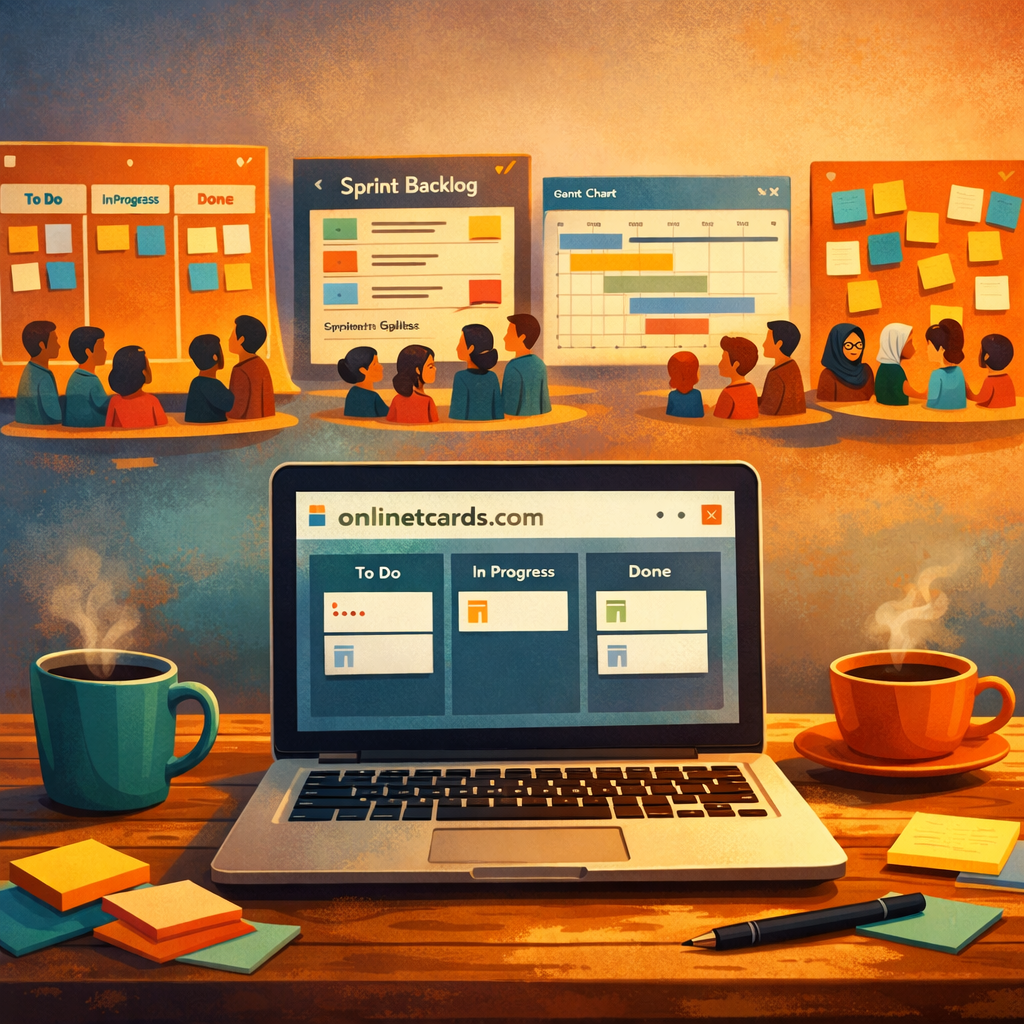
For teams wanting a simpler, free project management system that still supports Kanban and Scrum boards, consider onlinetcards.com. It provides a familiar board‑based experience similar to Trello and Monday, with a free tier that can ease migration for budget‑conscious teams. Each of these Monday alternatives has trade‑offs, so map features to your priorities before committing.
Migration tips when switching from Monday
Migrating from Monday to an alternative requires planning. Start by auditing your current boards, automations and integrations. Identify high‑value items that must be preserved—custom fields, linked items, time tracking entries—and check whether the target Monday alternative supports equivalent features or will need workarounds.
Export data from Monday (CSV/Excel) where possible and perform a small pilot import to validate column mapping and permissions. Recreate essential automations using the new tool’s automation rules or employ middleware like Zapier if native support is missing. Communicate changes with your team and provide short training sessions focused on daily workflows to reduce disruption.
Cost, scalability and long‑term governance among Monday alternatives
Cost models vary: some Monday alternatives charge per seat, others use tiered feature bundles or offer generous free tiers. Calculate total cost of ownership including add‑ons, automation runs and integration fees. Think beyond immediate price—consider scalability and governance features such as audit logs, admin roles, and SSO, which become crucial as teams expand.
For organisations with fluctuating headcounts, a flexible pricing plan or a freemium tool like onlinetcards.com can reduce overhead while preserving core features like Kanban and Scrum boards. Plan for periodic reviews of governance to maintain data hygiene and to ensure the alternative remains aligned with evolving processes.
Choosing the right Monday alternative for your team
To pick among Monday alternatives, run short, focused pilots with representative projects and users. Use objective criteria from your initial evaluation—onboarding time, speed of completing common tasks, availability of integrations and user satisfaction. Collect concrete feedback after two to four weeks and measure whether key workflows improved.
Remember that the best alternative is the one your team will actually use consistently. Balance features, cost and cultural fit, and prefer tools that offer straightforward migration paths and a supportive community or documentation to smooth adoption.