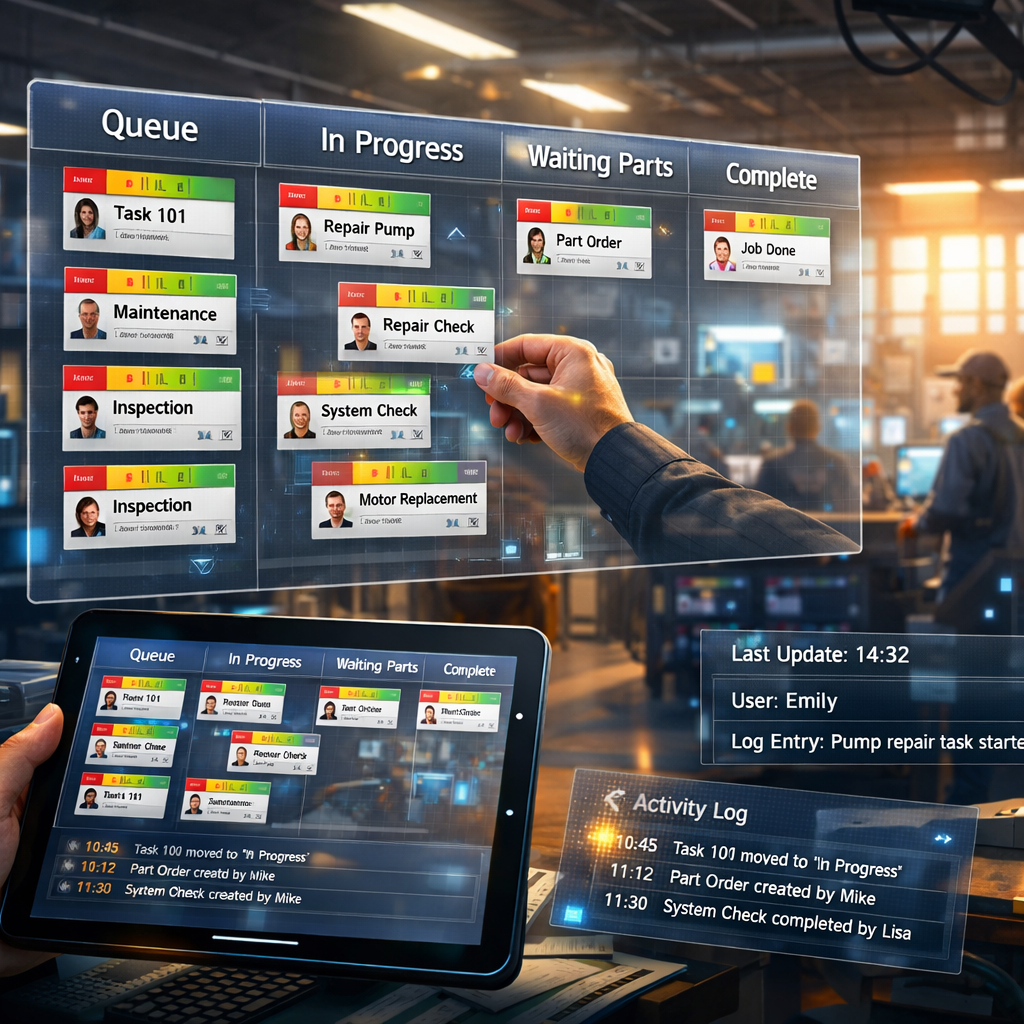
What Are Digital T Card Systems?
Digital T Card Systems are the modern, electronic evolution of the traditional T card boards used for tracking tasks, jobs and workflow on the shop floor, in maintenance departments and across service teams. Rather than physical laminated cards hung on a rail, digital T cards are software objects — cards with fields for job number, priority, owner, start and finish dates, status and notes — that sit on virtual rails or columns. They retain the intuitive visual layout of classic T cards while adding the flexibility of cloud access, automated updates and easy reporting.
These systems are purpose-built to mirror familiar paper-based processes, which makes adoption simpler for teams used to tactile boards. The advantage is the blend of recognisable workflow metaphors with the capabilities of modern project management platforms: drag-and-drop movement, search, filtering and audit trails. In short, Digital T Card Systems keep the clarity of T cards and bring the efficiency of software.
Core Features of Effective Digital T Card Systems
Effective Digital T Card Systems include a set of core features that reflect the needs of operational teams. Typical elements are custom card fields to capture job-critical data, configurable columns or rails for different stages, automated status transitions, and visual cues like colour-coding and icons. These features help teams quickly assess workload and priorities at a glance.
Other essential capabilities are notifications, user permissions and integrations. Notifications alert relevant people when a card changes state; permissions ensure only authorised users edit sensitive fields; integrations with tools such as calendars, asset management or time-tracking systems prevent information silos. A well-designed Digital T Card System balances simplicity with enough configurability to model real-world processes without overcomplication.
How Digital T Card Systems Improve Operational Workflow
Digital T Card Systems streamline workflow by making task status visible in real time and reducing the administrative overhead of paper-based updates. Teams can avoid duplication, locate the owner of a job instantly and see historical changes without chasing down colleagues. This transparency reduces delays and makes it easier to prioritise urgent work.
Crucially for maintenance and service environments, these systems support planned versus unplanned work distinction, queue management and SLA tracking. By transforming T cards into data, organisations can run reports that reveal bottlenecks, average job duration and resource utilisation — insights that are difficult to obtain reliably from physical boards.
Design Considerations and Best Practices
When implementing Digital T Card Systems, keep the user interface uncluttered and maintain the tactile mental model of physical T cards. Use minimal but meaningful fields and apply simple colour rules for priority and status. Excessive customisation can confuse users; aim for standards that reflect the majority of workflows and provide templates for specialised cases.
Train teams with real examples and migrate existing paper cards digitally rather than redesigning processes on day one. Regularly review card fields and workflows to remove unused items. Backups, audit logs and role-based permissions are non-negotiable for operational reliability. Finally, ensure mobile access for teams working away from desks so the system remains the single source of truth.
Selecting a Digital T Card System and a Practical Recommendation
Choosing a Digital T Card System involves evaluating fit for purpose: ease of use, configurability, reporting, reliability and cost. Look for providers that offer a free trial or a freemium tier so you can pilot typical workflows. Pay attention to whether the system supports kanban and scrum styles if you need agile management alongside traditional T card workflows.
For teams seeking a straightforward, no-cost entry point to digital card boards, solutions like onlinetcards.com provide free project management with kanban and scrum boards that can be adapted to mirror T card rails. Starting there lets you test the digital T card concept without initial investment, then scale up to paid features or integrations as requirements grow.